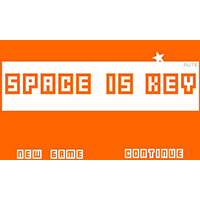
SPACE IS KEY







SIMILAR GAMES






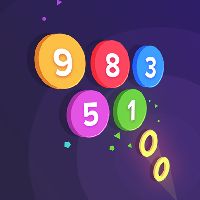












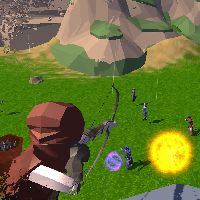


Description


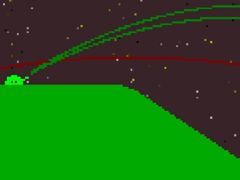
Space Is Key - RBUB
About Space Is Key - RBUB
We examine the core premise behind the phrase Space Is Key and its integration within the RBUB ecosystem. The concept revolves around strategic allocation of resources, timing of actions, and mastery of spatial awareness to achieve dominance in the virtual arena. This introduction sets the stage for a deep dive into mechanics, community dynamics, and progression pathways that define the experience.
Core Gameplay Principles
We emphasize that success hinges on three interlocking pillars: Resource Management, Tactical Positioning, and Adaptive Strategy. Each pillar demands a distinct set of skills and an acute awareness of the evolving game environment.
- Resource Management: Players must continuously evaluate input streams, prioritize upgrades, and allocate energy to maintain optimal performance.
- Tactical Positioning: Spatial awareness enables players to anticipate opponents' moves, secure advantageous zones, and control critical choke points.
- Adaptive Strategy: Flexibility in decision‑making allows rapid pivots in response to emergent threats or unexpected opportunities.
Resource Management Details
We break down the resource ecosystem into three primary categories: Energy, Currency, and Time. Energy serves as the immediate fuel for actions, currency unlocks permanent upgrades, and time governs the pacing of progress. Effective players balance these elements by:
- Monitoring energy regeneration rates and aligning them with action cycles.
- Investing currency in upgrades that amplify long‑term efficiency rather than short‑term gains.
- Scheduling high‑impact activities during peak energy windows to maximize output.
Tactical Positioning Insights
We stress the importance of mapping the terrain, identifying high‑value sectors, and establishing defensive perimeters. Players who master positioning can:
- Force opponents into suboptimal routes, increasing the likelihood of capture.
- Control resource nodes that serve as bottlenecks for enemy expansion.
- Create overlapping fields of view that limit surprise attacks.
Progression Pathways
We outline the structured journey that players undertake, from novice beginnings to seasoned strategists. The progression model incorporates the following stages:
- Initial Familiarization: Learning basic controls, understanding resource flow, and completing introductory tutorials.
- Skill Consolidation: Repeating low‑risk scenarios to internalize core mechanics and develop reflexive responses.
- Strategic Expansion: Unlocking new zones, acquiring advanced upgrades, and experimenting with multi‑layered tactics.
- Mastery: Executing complex coordinated maneuvers, leading community events, and influencing meta‑trends.
Skill Consolidation Techniques
We recommend targeted practice loops that focus on one variable at a time. For example, a player might isolate timing challenges by engaging only in rapid‑fire actions while holding other variables constant. This isolates cause and effect, accelerating learning curves.
Community Interaction and Collaboration
We highlight the symbiotic relationship between individual achievement and collective advancement. The community thrives on shared knowledge, cooperative ventures, and competitive events. Key collaborative mechanisms include:
- Guild Participation: Joining groups that pool resources, share strategic insights, and coordinate large‑scale operations.
- Knowledge Exchange: Posting guides, video analyses, and real‑time commentary to elevate overall skill levels.
- Event Scheduling: Aligning personal play sessions with community events to maximize rewards and visibility.
Guild Dynamics
We describe effective guild structures that promote equitable contribution and reward distribution. A well‑balanced guild assigns roles based on player strengths, maintains transparent resource logs, and schedule regular strategy sessions to refine tactics.
Advanced Tactical Concepts
We delve into sophisticated strategies that separate elite players from the rest. These concepts involve layered decision trees, predictive modeling, and risk calculus.
- Predictive Modeling: Using historical data to forecast opponent behavior patterns and preemptively position assets.
- Layered Defense: Constructing multiple tiers of protection that force adversaries to expend disproportionate effort to breach each layer.
- Dynamic Resource Reallocation: Shifting energy reserves in real‑time to counteract emergent threats without sacrificing offensive momentum.
Predictive Modeling Implementation
We suggest implementing a simple scoring algorithm that tallies opponent actions such as attack frequency, movement direction, and resource consumption. By feeding this data into a decision matrix, players can adjust positioning before the opponent executes a move.
Performance Optimization
We focus on technical enhancements that improve responsiveness and reduce latency. Optimizations include:
- Adjusting graphics settings to maintain high frame rates during peak action sequences.
- Employing keyboard shortcuts for rapid command execution, minimizing input lag.
- Utilizing network diagnostics to identify and rectify connectivity bottlenecks.
Graphics Settings Recommendations
We advise lowering texture resolution and disabling non‑essential visual effects while preserving core gameplay clarity. This trade‑off yields smoother motion and more reliable input response.
Strategic Review and Continuous Improvement
We advocate for regular performance reviews that track metrics such as win ratio, resource efficiency, and decision latency. By analyzing these data points, players can pinpoint specific areas for refinement and set measurable improvement targets.
Metrics Tracking Template
We provide a concise template for monitoring key indicators:
- Win Ratio: Percentage of matches won over total matches played.
- Resource Turnover Rate: Ratio of resources spent to resources gained per session.
- Action Latency: Average time from input registration to in‑game response.
Conclusion
We synthesize the insights presented, reinforcing that mastery of Space Is Key - RBUB demands a holistic approach that intertwines resource discipline, tactical foresight, adaptive strategy, and community engagement. By systematically applying the principles outlined, players can transcend ordinary performance, achieve sustained success, and contribute meaningfully to the evolving landscape of the game. For further exploration and to experience the full suite of features, visit Retro Bowl Unblocked and immerse yourself in the dynamic world where space truly is the ultimate key.
Play Space Is Key for free on RBUB, the platform with thousands of the best games. No Ads and easy to play from anywhere. Have fun with our unblocked games! Play with your keyboard or Click.